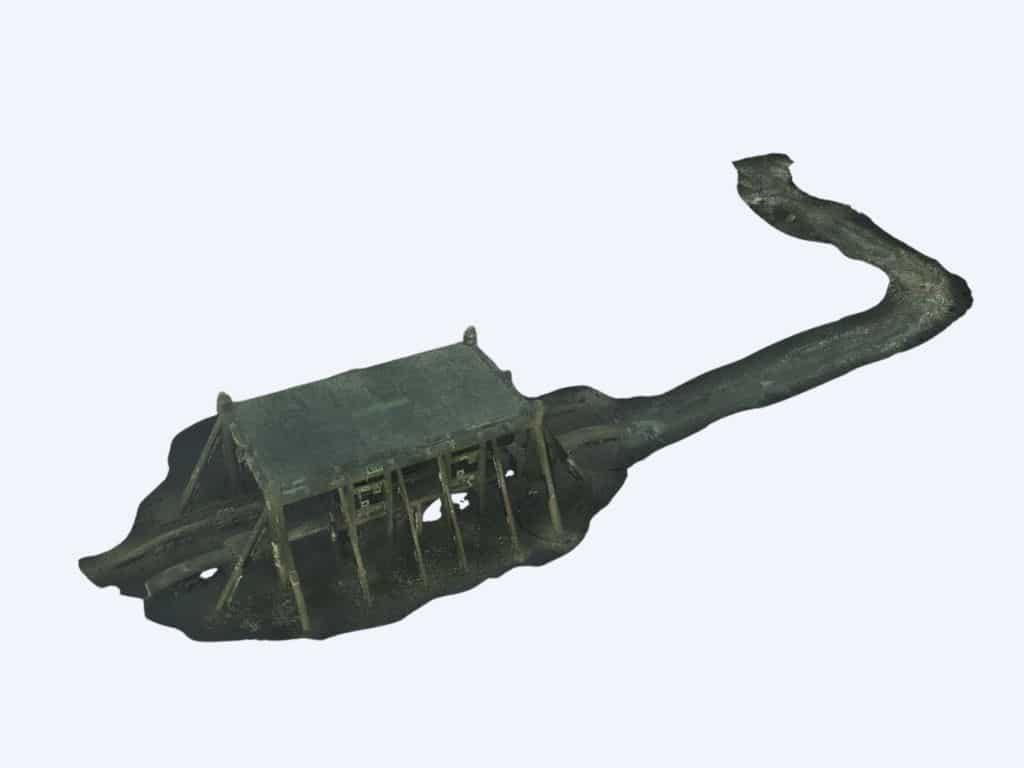
Wind turbine anode & CPS inspection
3D inspection of wind turbine anodes and CPS to quantify wear and verify positioning.
Read more

In the demanding environment of offshore oil and gas operations, the integrity and safety of platform infrastructure are of paramount importance. Commissioned to inspect a platform in the North Sea, Subsea 7 chose IVM Technologies to conduct a photogrammetric survey of a jacket.
The jacket understudied is a four-legged tower, standing in 162 meters of water. This jacket is a first-generation Northern North Sea, installed in 1976 with an initial design life of 25 years. Over the decades, the jacket has been subjected to various forms of damage, including fatigue loading, accidental impacts, and corrosion, all of which have compromised its structural integrity.
Given the platform’s extended operational life beyond its original design parameters, the client recognized the need for a comprehensive inspection and 3D reconstruction of the slots. This initiative was crucial for assessing the current condition of the platform, identifying potential areas of concern, and planning necessary maintenance and repair activities to ensure continued safe and efficient operations.

To overcome the access restrictions, our teams implemented a two-step inspection strategy. This approach involved:
This dual-positioning technique ensured that all critical areas of the slots were thoroughly inspected, despite the access restrictions. The flexibility and adaptability of the ORUS3D system were instrumental in the successful execution of this strategy.
The data captured during the inspections was processed to generate high-resolution 3D reconstructions of the slots. These detailed 3D models provided a comprehensive visual representation of the inspected areas, enabling precise identification and localization of key components including: welds, pad eyes, anodes and clamps.
Contact us today to discuss your requirements, explore our solutions, and embark on a transformative journey in underwater inspection.