Offshore wind turbine inspection
See how subsea imaging was used to inspect a damaged offshore wind turbine pile following a collision and support preventive maintenance.
Read more

Offshore wind turbine foundations integrate several critical components that require regular inspection to monitor their condition over time. Among them, anodes help protect the steel structure against corrosion and must retain sufficient material to continue performing their role effectively. Inside the foundation, the CPS running through the J-tube also requires to maintain a certain position.
For the anodes, the objective was to quantify their level of wear by determining the remaining volume of material. For the CPS, the objective was to obtain accurate measurements of its angle and distance within the J-tube, despite the constrained environment inside the wind turbine foundation. Both applications required turning subsea visual data into objective and measurable geometrical information.
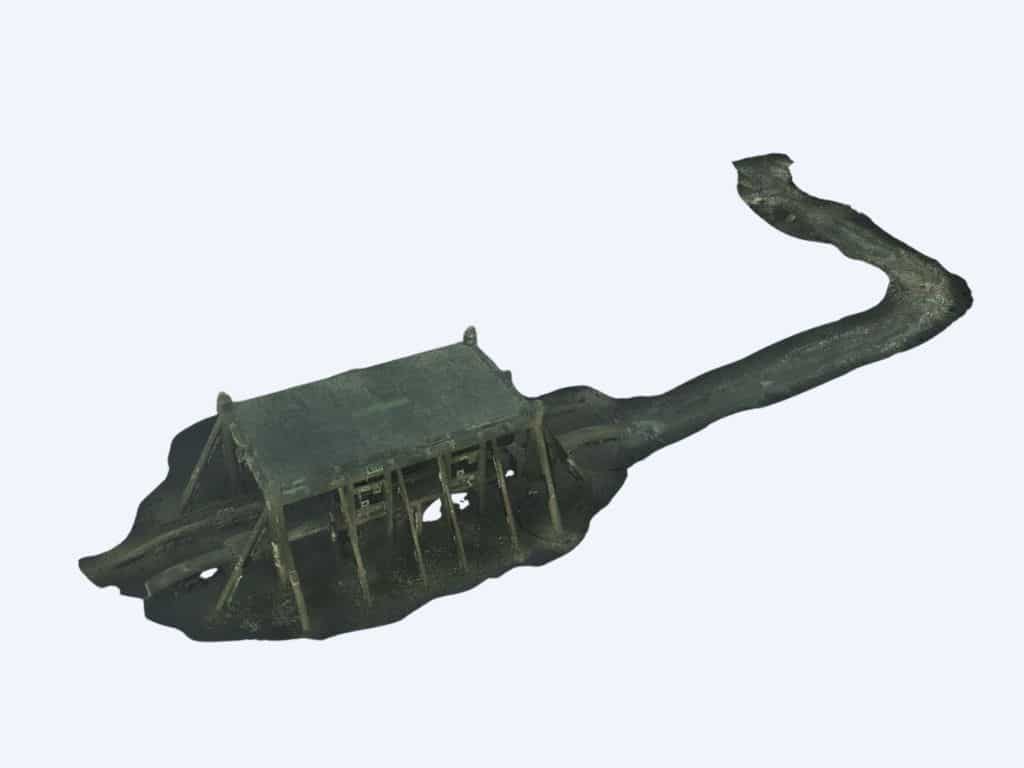
Using the Hydro 100, 3D scans of the targeted components were acquired during the subsea operation. The anodes were reconstructed in 3D to assess their geometry and calculate their remaining volume, providing quantitative information on their level of wear. A 3D acquisition of the CPS area was also performed inside the foundation, enabling measurements of the CPS angle and its distance relative to the J-tube structure.


Contact us today to discuss your requirements, explore our solutions, and embark on a transformative journey in underwater inspection.